
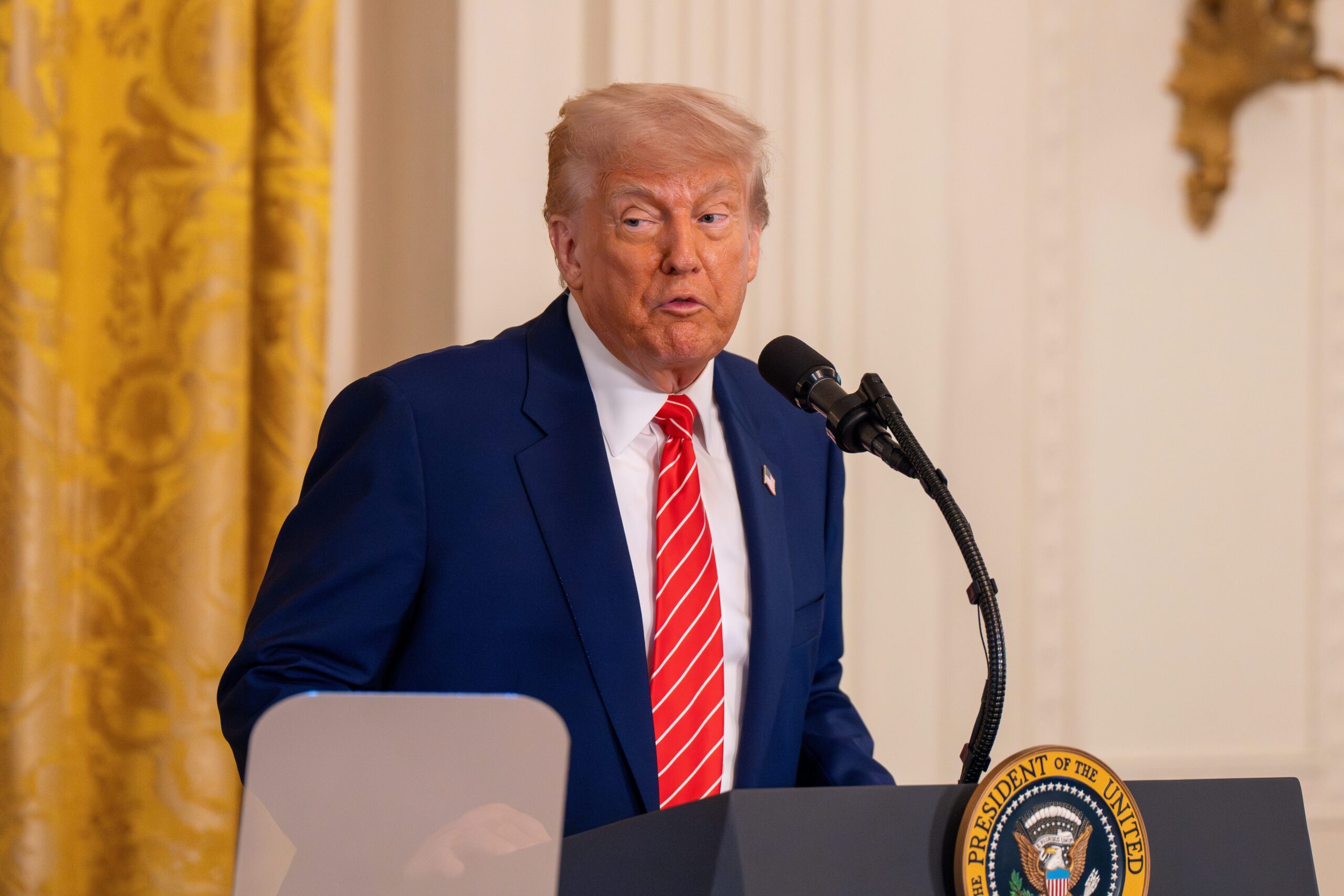
Donald Trump renewed his threat to impose a 100% tariff on all films produced outside the United States. He claimed the American film industry had been “stolen” by other countries. On Monday, he said California suffered particularly and that the tariff would “solve this long-time, never-ending problem.”
In May, Trump said he planned to discuss the levy with Hollywood executives and begin its implementation. He warned that America’s film industry was dying “a very fast death.” His remarks followed a new wave of tariffs announced last week, including a 100% levy on branded or patented drug imports and 50% levies on kitchen and bathroom cabinets.
Trump singles out California
Trump wrote on Truth Social: “Our movie-making business has been stolen from the United States by other countries, just like stealing ‘candy from a baby.’ California, with its weak and incompetent governor, has been particularly hard hit!” He added the 100% tariff would apply “on any and all movies made outside the United States.”
The president did not specify when the tariff would take effect. The White House has yet to comment. It remains unclear whether the tariffs would cover films on streaming services such as Netflix, in cinemas, or both, and how the levy would be calculated.
Concerns from Canada
The Canadian Chamber of Commerce expressed deep concern over the proposed tariff. American studios rely heavily on Canadian facilities, crews, and talent to produce Hollywood films. Catherine Fortin-LeFaivre, senior vice president of international policy, warned the tariff could increase costs, stifle investment, and harm competitive advantages built by both countries. She said it would weaken the economies and threaten thousands of middle-class jobs.
Dan Coatsworth, investment analyst at AJ Bell, questioned how the tax would work, noting that tariffs usually apply to goods. He explained that filmmakers often shoot abroad for better incentives. “The threat of 100% tariffs raises more questions than it answers,” he said. He added that defining an American-made movie would be difficult if a film had foreign actors, directors, or funding. Coatsworth said forced US production could increase costs, which studios would likely pass on to viewers, potentially hurting demand for streaming services and cinemas.
Investors currently do not see the threat as serious. Stocks for Netflix and Disney dipped briefly but recovered. Recent US studio films, including Deadpool & Wolverine, Wicked, and Gladiator II, were produced outside the country.
US remains a major production hub
Despite challenges, the US remains a leading film production hub. Industry research firm ProdPro reported $14.54 billion in US production spending last year, down 26% from 2022. Countries attracting increased spending include Australia, New Zealand, Canada, and the UK.
The UK government is monitoring the proposed US tariff and its potential impact on the British film industry. A Department for Business & Trade spokesperson highlighted that the UK film sector employs millions and generates billions for the economy.
Trump expands tariffs on furniture and timber
Separately, Trump announced 10% tariffs on softwood timber and lumber imports, plus 25% levies on kitchen cabinets, vanities, and upholstered wooden furniture. Earlier, he hinted on Truth Social at “substantial tariffs on any country that does not make its furniture in the United States,” adding, “Details to follow!!!”
The new tariffs will take effect on 14 October, with some set to rise sharply next year for countries that fail to reach agreements with the US. This follows last week’s announcement of a 100% levy on branded or patented drug imports unless companies build factories in the US.
