


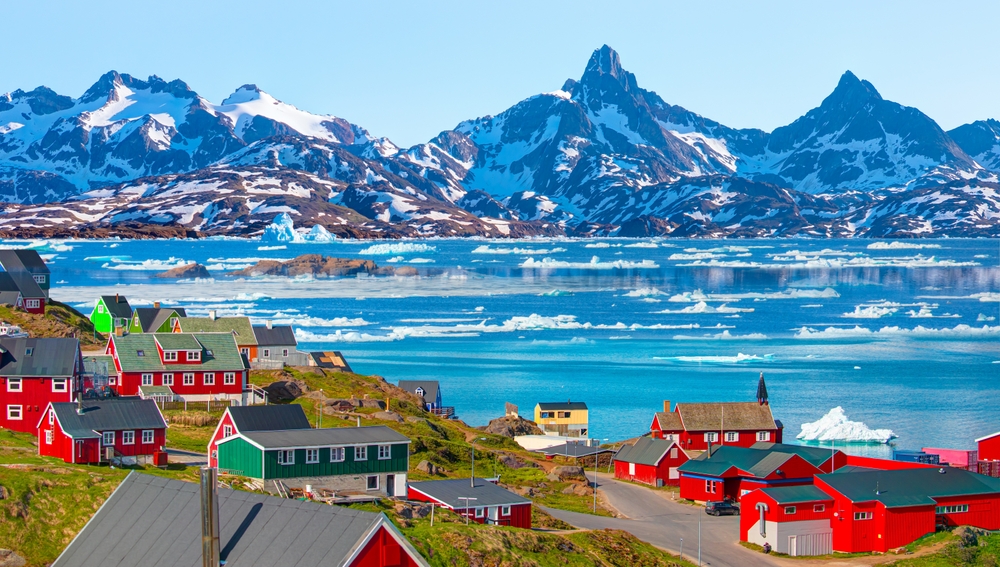
Greenland’s strategic location in the Arctic has once again thrust the vast island into the global spotlight after the White House said the use of the US military remains an option in President Donald Trump’s renewed push to bring the territory under American control.
The comments have triggered swift pushback from European leaders, Canada and Denmark, all of whom insist that Greenland’s future can only be decided by its people.
White House Keeps Military Option on the Table
White House press secretary Karoline Leavitt said President Trump views acquiring Greenland as a national security priority, arguing it is essential to counter growing competition from Russia and China in the Arctic.
“The president and his team are discussing a range of options to pursue this important foreign policy goal, and of course, utilising the US military is always an option at the commander in chief’s disposal,” Leavitt said.
Trump first raised the idea of purchasing Greenland during his initial term, but the proposal resurfaced after a recent US military operation that led to the arrest of Venezuelan President Nicolás Maduro. The renewed rhetoric has raised concerns, even among some Republicans. House Speaker Mike Johnson said military action would not be appropriate, while Trump’s own special envoy to Greenland, Louisiana Governor Jeff Landry, suggested force would not be necessary.
Allies Push Back and Defend Greenland’s Sovereignty
Denmark and several European allies moved quickly to reject the idea of a US takeover. Leaders from France, Germany, Italy, Poland, Spain and the United Kingdom joined Danish Prime Minister Mette Frederiksen in issuing a joint statement affirming that Greenland “belongs to its people.”
“Greenland belongs to its people,” the statement said, adding that only Denmark and Greenland have the right to decide the island’s future. Greenland is a self-governing territory within the Kingdom of Denmark and a part of the NATO alliance.
Canadian Prime Minister Mark Carney also voiced support for Denmark, announcing that Canada’s Governor General Mary Simon and Foreign Minister Anita Anand would visit Greenland next month. Standing alongside Frederiksen in Paris, Carney said decisions about Greenland’s future rest solely with Denmark and its people.
Despite the diplomatic backlash, Trump administration officials have continued to press their case. White House deputy chief of staff Stephen Miller said the US should control Greenland as part of its broader security strategy, though he downplayed the idea of armed intervention, saying no one would fight the US over the island.
Why Greenland Matters Strategically
Greenland’s importance lies in both its geography and its resources. Located off Canada’s northeastern coast, more than two-thirds of the island lies within the Arctic Circle, a position that has made it central to North American defence since World War II.
The US operates the Pituffik Space Base in northwestern Greenland under a defence agreement with Denmark dating back to 1951. The base plays a key role in missile warning, missile defence and space surveillance for the US and NATO. Greenland also forms part of the GIUK Gap, a critical corridor where NATO monitors Russian naval activity in the North Atlantic.
Beyond military considerations, Greenland is rich in rare earth minerals vital for electronics, renewable energy technologies and electric vehicle batteries. The US Geological Survey has also identified potential offshore oil and gas reserves, further adding to the island’s strategic and economic value.
Greenland was a Danish colony for centuries and became an integral part of the kingdom in 1953. While Denmark retains sovereignty, a 2009 law granted Greenland expanded self-rule and recognised its right to pursue independence under international law, an option supported by many Greenlanders.
For now, Greenland’s leaders have firmly rejected Trump’s renewed calls. But as Arctic competition intensifies, the island is likely to remain a focal point in the growing struggle for influence at the top of the world.
