


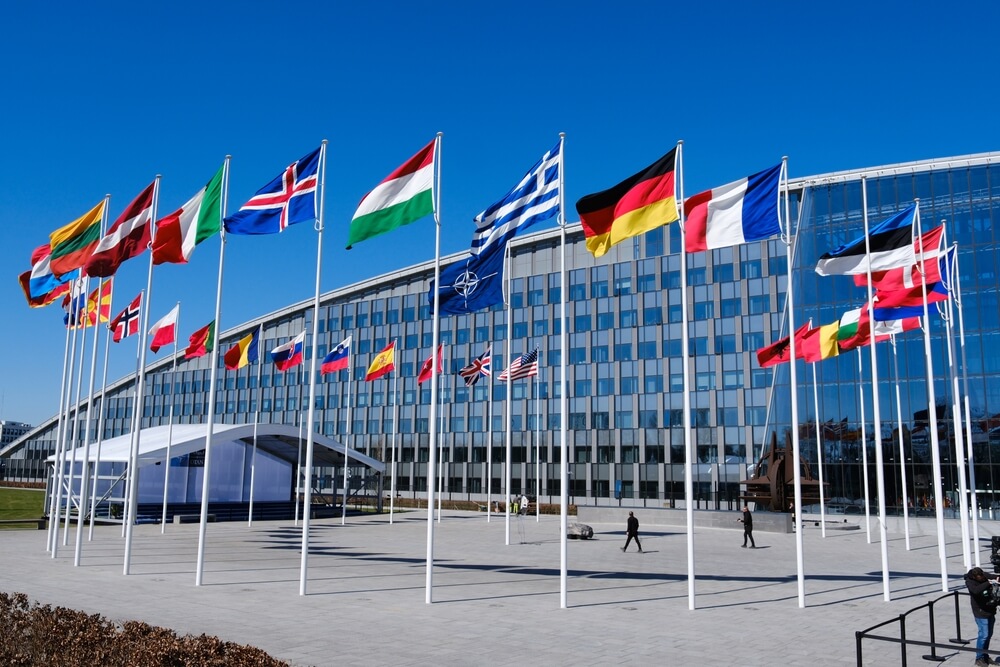
There was a clear message emerging from this week’s NATO defence ministers’ meeting in Brussels: the alliance is evolving, and Europe is expected to take on far greater responsibility for its own security.
American and European officials appear to agree that NATO must adapt to changing global realities. But while both sides support a stronger European role, their motivations are not entirely the same. Washington wants to free up resources to focus on other regions, particularly the Indo-Pacific. European leaders, meanwhile, are mindful of the unpredictability of the current U.S. administration and the need to safeguard their own defence capabilities.
Washington Pushes for a “NATO 3.0”
U.S. Under Secretary of War Eldridge Colby, representing Washington at the talks, described the moment as an opportunity to build what he called “NATO 3.0.” His message was direct: Europe must assume primary responsibility for conventional defence on the continent.
According to Colby, European allies should field the majority of forces needed to deter — and if necessary defeat — any conventional aggression in Europe. The United States has long argued that it carries a disproportionate share of the defence burden and has repeatedly urged allies to increase their spending, especially as it shifts strategic attention toward Asia.
That push has gained urgency following months of rhetoric from President Donald Trump questioning NATO’s collective defence commitments. Last summer, allies agreed to a new defence spending target of 3.5% of GDP, a move seen as both a response to U.S. pressure and a recognition of growing security threats.
NATO Secretary General Mark Rutte described the Brussels meeting as pivotal, pointing to what he called a “real shift in mindset” and a stronger European defence posture within the alliance. Several countries — including Denmark, Estonia, Latvia, Lithuania and Poland — are already on track to exceed the new spending benchmark well ahead of schedule.
Europe Signals Readiness to Step Up
European ministers did not resist Washington’s call. In fact, many embraced it.
German Defence Minister Boris Pistorius acknowledged that the U.S. has long carried the bulk of Europe’s conventional defence responsibilities. He said it is only natural that Europeans now gradually take on more of that role to preserve NATO’s transatlantic character.
France’s Catherine Vautrin echoed that sentiment, saying Europe has already begun strengthening what she described as the alliance’s “European pillar.” Romania’s Radu-Dinel Miruță emphasized the need to expand European defence production, arguing that while cooperation with the U.S. remains essential, Europe must ultimately be capable of protecting itself.
Dutch Defence Minister Ruben Brekelmans stressed the importance of transparency, calling for a “no-surprise policy” between Washington and its allies. As the U.S. shifts more focus to the Western Hemisphere and the Indo-Pacific, he said, clear communication will be critical to ensuring that any American drawdown is matched by a European buildup.
Signs of that rebalancing are already visible. The U.S. recently announced it would not replace a rotating infantry brigade in Romania, hinting at a gradual reduction in its footprint. At the same time, European nations have taken on greater leadership roles within NATO’s command structure.
Maintaining the Transatlantic Core
Despite the shift, NATO leaders are keen to preserve a strong American anchor within the alliance. Rutte emphasized the importance of keeping the Supreme Allied Commander Europe — the officer responsible for the alliance’s military planning — an American. That, he argued, guarantees continued U.S. involvement and reflects the economic reality that the United States accounts for more than half of NATO’s total economic power.
Recent tensions have underscored the delicate balance. Only weeks ago, President Trump threatened military action against fellow NATO member Denmark over Greenland. In response, NATO launched enhanced vigilance measures in the Arctic while diplomatic talks continue between Denmark, Greenland and the U.S.
The message from Brussels was clear: NATO is not retreating, but it is transforming. Whether this “NATO 3.0” strengthens the alliance or tests its cohesion will depend on how smoothly this rebalancing of responsibilities unfolds in the years ahead.
