


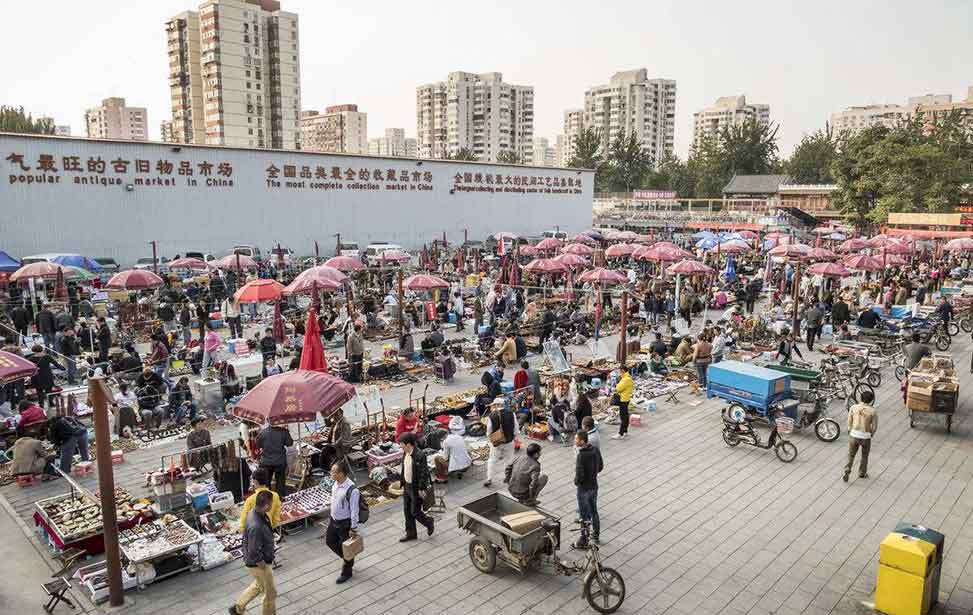
Located in the Chaoyang District, Panjiayuan Market spans several acres and is home to thousands of vendors. It operates daily, but weekends draw the largest crowds, with rows of stalls showcasing everything from centuries-old relics to modern-day handicrafts.
The market’s reputation rests on its diversity. Visitors can find ancient coins, jade ornaments, Buddhist statues, porcelain, wood carvings, calligraphy, paintings, and even furniture. Alongside authentic antiques, the market also offers replicas and affordable crafts, making it accessible for casual shoppers as well as serious collectors.
For history enthusiasts, the market provides a chance to engage directly with China’s heritage. Vendors share stories behind the artifacts, explaining their origins and cultural significance. Even for those not looking to buy, browsing the market offers a living museum experience.
Tourists describe Panjiayuan as both chaotic and enchanting. Narrow pathways are filled with vibrant colors, the sounds of bargaining, and the aroma of street food. Each visit feels like a treasure hunt, where unexpected finds appear at every corner.
Collectors from around the world frequent the market in search of rare items. Some come looking for Ming or Qing dynasty relics, while others are drawn to regional crafts representing China’s ethnic minorities. The variety reflects the vast cultural landscape of the country.
Artisans also benefit from the market’s popularity. Many stalls feature handcrafted items such as embroidery, pottery, and jewelry made by local artists. This not only provides livelihoods but also preserves traditional techniques that might otherwise fade with time.
Panjiayuan has also embraced modern trends. Online platforms allow vendors to showcase their goods to international buyers, expanding the market’s reach beyond Beijing. Livestreams and digital auctions bring the antique-shopping experience to global audiences.
Despite its commercial success, authenticity remains a concern. Experts advise visitors to be cautious when buying high-value antiques, as replicas can be difficult to distinguish. Still, for many, the joy of visiting lies not only in purchasing but also in exploring the culture and atmosphere.
The market’s social role is equally significant. It has become a gathering place for artists, students, and collectors to share knowledge and exchange ideas. Cultural researchers often visit to study traditional crafts, while travelers come to experience a slice of Beijing’s urban life.
Local businesses benefit as well. Nearby cafés, restaurants, and hotels see increased traffic from tourists drawn to the market. Its popularity has helped establish the Chaoyang District as both a cultural and commercial hub.
Panjiayuan’s history is as rich as its offerings. Established in the 1980s, it has grown from a small flea market into a landmark of Beijing’s cultural scene. Over the decades, it has adapted to changing trends while maintaining its identity as a space where tradition and commerce meet.
For many visitors, a trip to Beijing feels incomplete without experiencing Panjiayuan Market. Whether hunting for antiques, buying souvenirs, or simply soaking in the atmosphere, the market provides a window into China’s cultural soul.
As Beijing continues to modernize, Panjiayuan remains a reminder of the city’s deep history and artistic heritage. Its unique blend of old and new ensures that it will continue to be celebrated as a true cultural treasure trove.
