

Officials highlighted fake websites and political ads during Moldova’s recent election and pointed to fabricated news sites spreading altered videos with false claims about Ukrainian President Volodymyr Zelenskyy to weaken support.
The UK issued sanctions on Russian media and ideological outlets on Tuesday as the foreign secretary urged Western nations to improve their response to information warfare launched by hostile foreign states.
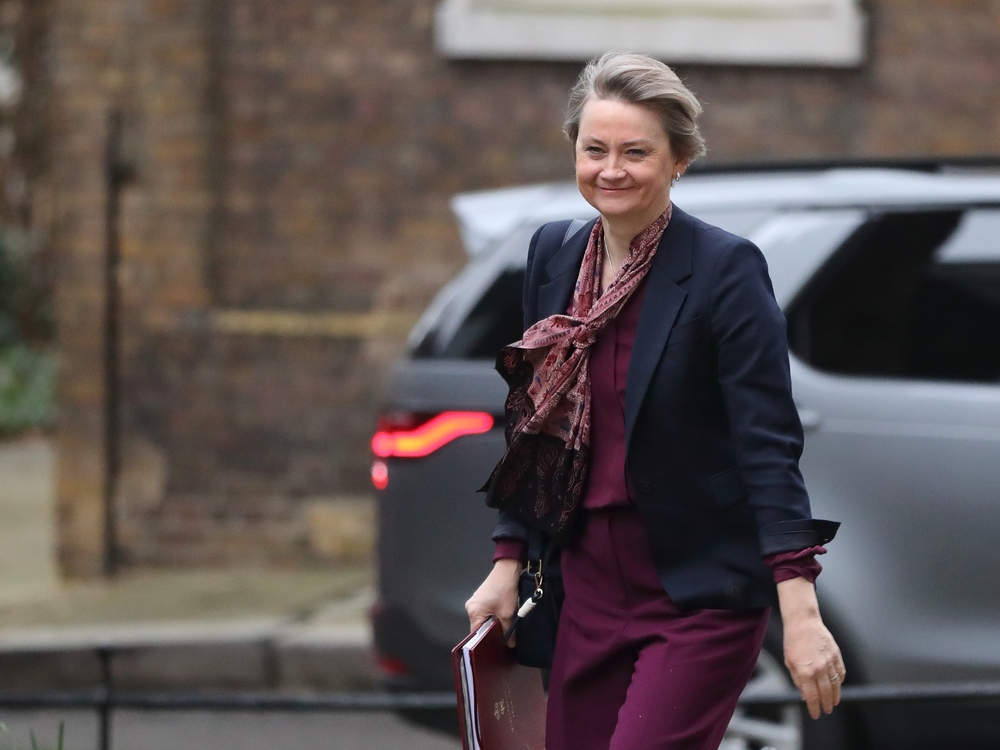
Yvette Cooper announced sanctions on the Telegram channel Rybar, the Foundation for the Support and Protection of the Rights of Compatriots Living Abroad, which Estonian intelligence previously identified as a GRU front, and the Centre for Geopolitical Expertise, a think tank led by far-right Russian writer Aleksandr Dugin.
She also confirmed sanctions on two China-based companies for what she described as sweeping cyberattacks targeting the UK and its allies.
Britain Steps Up Measures Against Cyber and Propaganda Threats
During a speech at the Foreign Office in London, Cooper argued that Britain and its partners now face intensifying hybrid threats designed to weaken infrastructure, damage national interests and interfere in democratic processes.
She labelled the attacks as Russian information warfare and insisted that the UK now acts to defend itself.
She stated that these threats include sabotage and coordinated disinformation campaigns that flood social platforms with AI-generated and manipulated videos aimed at reducing Western backing for Ukraine’s resistance to Russia’s full-scale invasion.
British officials referenced fake websites and political ads that surfaced during Moldova’s election, along with fabricated news sites spreading false stories about Zelenskyy and his wife to undermine support for Ukraine.
Calls for Stronger International Unity
Cooper delivered her remarks as part of a commemoration marking the hundredth anniversary of the Locarno Treaties, which strengthened European peace after World War I.
She emphasised the need for international cooperation at a moment when US President Donald Trump has disrupted long-standing alliances and created uncertainty about the US position on NATO.
Cooper met US Secretary of State Marco Rubio in Washington on Monday and said those discussions demonstrated clear and firm US commitment to NATO.
