


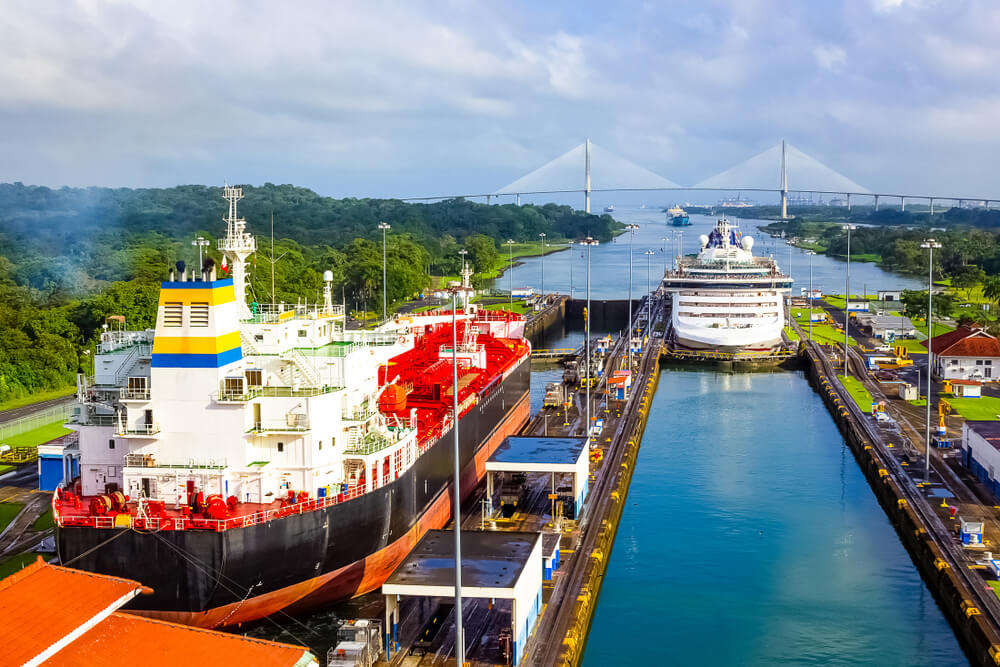
Panama’s top court has struck down a long-standing concession that allowed a Hong Kong company to operate key ports at either end of the Panama Canal, triggering sharp criticism from Hong Kong’s government and deepening tensions around the strategic waterway.
The ruling followed an audit by Panama’s comptroller that flagged alleged irregularities in the 25-year extension of the concession granted in 2021.
Hong Kong pushes back against court decision
Hong Kong’s government said on Friday that it “strongly disapproves of and firmly rejects” the decision to annul the concession held by a subsidiary of CK Hutchison Holdings. In a statement, it warned against what it described as coercive or unreasonable actions by foreign governments that could damage the legitimate interests of Hong Kong businesses.
The comments came after Panama’s Supreme Court ruled late Thursday that the concession granted to Panama Ports Company, a CK Hutchison subsidiary, was unconstitutional. The decision aligns with long-standing US concerns about limiting any Chinese influence over the Panama Canal, one of the world’s most important shipping routes.
US pressure and security concerns loom large
Blocking China’s influence over the canal has been a priority for Washington, particularly under former president Donald Trump, who at one point even suggested Panama should return control of the canal to the United States. Marco Rubio, now US secretary of state, chose Panama as his first overseas visit, underscoring the issue’s importance.
Although Panama’s government and the canal authority have repeatedly said China has no role in canal operations, US officials have framed the operation of the ports as a national security concern. The Supreme Court’s brief ruling did not specify what will happen next to the ports or who might take over their management.
Company warns of fallout and legal fight ahead
Panama Ports Company said it had not yet been formally notified of the ruling and defended its concession as the result of a transparent international bidding process. It argued that the decision lacks legal basis and threatens not only the company’s contract but also the livelihoods of thousands of Panamanian families who depend on port activity, as well as broader legal certainty in the country. The company said it reserves the right to pursue legal action in Panama or elsewhere.
The ruling adds to CK Hutchison’s already delicate position. Last year, the conglomerate announced plans to sell its majority stake in the Panamanian ports and other assets worldwide to an international consortium that included BlackRock. That deal appeared to stall amid objections from Beijing. CK Hutchison later said it was considering bringing in a Chinese investor, a move widely seen as an attempt to ease political pressure, but no further updates have been announced.
The episode highlights the increasingly tightrope-like path Hong Kong’s business leaders must walk, caught between Beijing’s expectations of national loyalty and growing geopolitical friction between China and the United States.
