


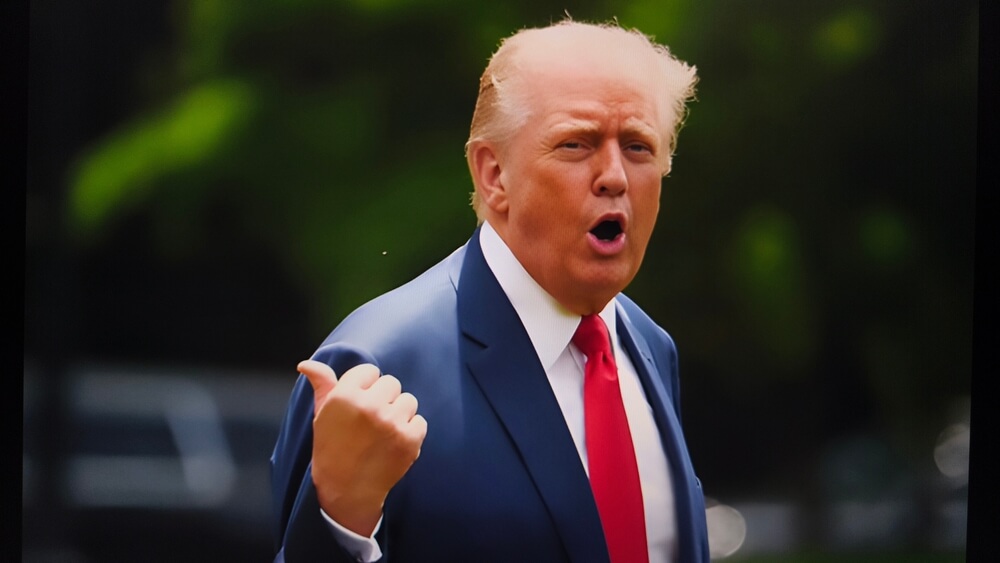
US President Donald Trump has introduced a new global tariff set at ten percent. The tariff came into force after the Supreme Court blocked many of his earlier import taxes on Friday. Trump signed an executive order just hours after the ruling to impose the levy from 24 February. He later threatened to raise the tariff to fifteen percent but has not issued an official directive to increase the rate. The White House has not confirmed whether the higher rate will take effect.
Emergency Powers and Market Uncertainty
The administration applies the levy under Section 122 of the 1974 Trade Act. This law allows the president to impose the charge for 150 days without congressional approval. Carsten Brzeski, an analyst at ING, said the rapid tariff changes create chaos for businesses. He said uncertainty has returned to last year’s levels and warned that trading partners may retaliate. He also said the risk of a full trade war is now higher than last year.
Trade Strategy and Growing Deficit
The executive order states that the temporary import duty aims to address international payment problems and rebalance trade relationships. The administration says the policy will benefit American workers, farmers, and manufacturers. Trump has argued that tariffs are necessary to reduce the US trade deficit, which measures how much imports exceed exports. However, the deficit reached a record high last week. It widened by 2.1 percent compared with 2024 and reached roughly 1.2 trillion dollars. The US has already collected at least 130 billion dollars in tariffs under the 1977 International Emergency Economic Powers Act.
Supreme Court Ruling and Political Fallout
Trump strongly criticised the Supreme Court’s decision. He called the ruling ridiculous, poorly written, and anti-American. In a six to three decision, the justices ruled that he exceeded his authority when he introduced sweeping tariffs last year under emergency powers. On Monday, Trump warned he would impose higher tariffs on countries that manipulate recent trade deals. His warning followed global reactions to the court decision and growing uncertainty over existing agreements.
Global Reactions and Trade Deal Tensions
Several countries said they are reviewing tariffs and trade agreements after the ruling. The United Kingdom said reciprocal action remains possible if the US does not honour its tariff deal, although it said no one wants a trade war. The European Union said it would suspend ratification of a deal reached over the summer. India also said it would postpone scheduled talks to finalise a recent agreement.
