


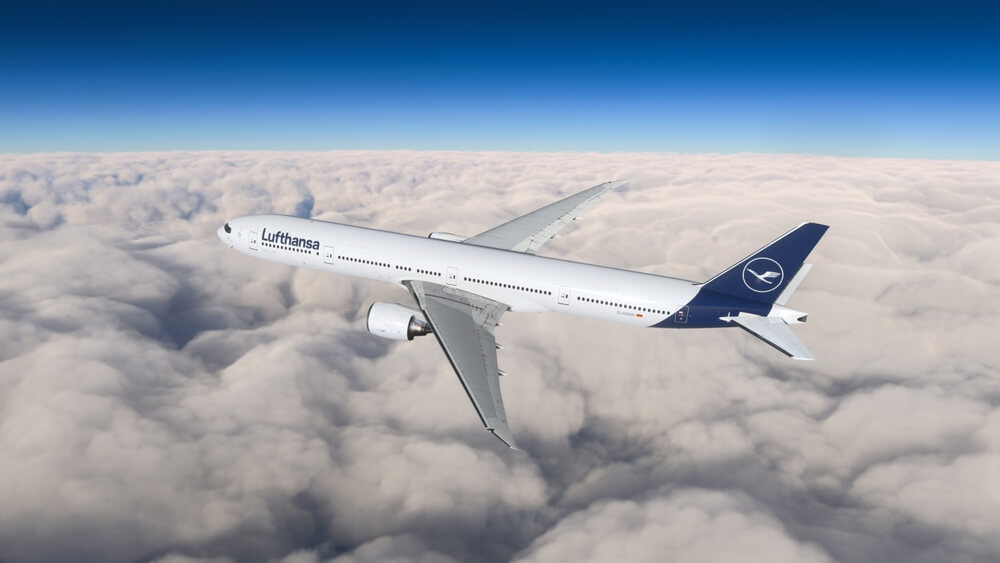
Airlines around the world are tightening safety rules for portable batteries after a serious fire on a South Korean aircraft raised fresh concerns about the risks posed by power banks. In Europe, Germany’s Lufthansa has become the first major carrier to introduce sweeping new restrictions.
The changes come after a power bank ignited in an overhead compartment on an Air Busan flight in January 2025, injuring passengers and destroying the aircraft. The incident has pushed airlines and regulators to rethink how lithium batteries are handled on board.
Lufthansa Introduces Immediate Onboard Restrictions
Lufthansa has updated its policy to limit how power banks and battery packs can be used during flights. With immediate effect, passengers are no longer allowed to use power banks to charge phones, tablets or other personal devices while in the air. Charging through seatback infotainment systems is also no longer permitted.
The airline clarified that power banks are still allowed in cabin baggage, and the existing ban on placing them in checked luggage remains unchanged. However, storing power banks in overhead compartments is now prohibited. Instead, passengers must keep them on their person or place them in hand luggage under the seat.
Travelers are advised to fully charge their devices before boarding or rely on the aircraft’s built-in USB charging ports during the flight.
Limits on Size, Quantity and Approval
Under the new rules, power banks are restricted to a maximum capacity of 100 watt hours, equivalent to about 27,000 milliampere-hours. Passengers wishing to carry larger battery packs must inform the airline in advance and receive explicit approval.
Any undeclared batteries exceeding the limit risk being confiscated and destroyed. Lufthansa has also capped the number of power banks each passenger may bring on board at two.
A company spokesperson said the policy update reflects revised safety recommendations from the European Union Aviation Safety Agency. The rules apply across all Lufthansa-operated flights, as well as services run by affiliated airlines including Swiss, Eurowings, Austrian Airlines, Brussels Airlines, Edelweiss, Discover and Air Dolomiti.
A Fire That Changed Aviation Safety Thinking
The stricter approach follows a dramatic fire aboard an Air Busan Airbus A321 earlier this year. The aircraft was still on the ground when a power bank stored in an overhead compartment caught fire, injuring 27 people.
Investigators later confirmed that a damaged power bank caused the blaze, which spread rapidly and engulfed the fuselage within minutes. Passengers were forced to evacuate using emergency slides.
The incident has prompted aviation safety authorities worldwide to explore tougher measures aimed at reducing the risk of battery-related fires, with Lufthansa’s new rules likely to signal broader changes across the industry.
