


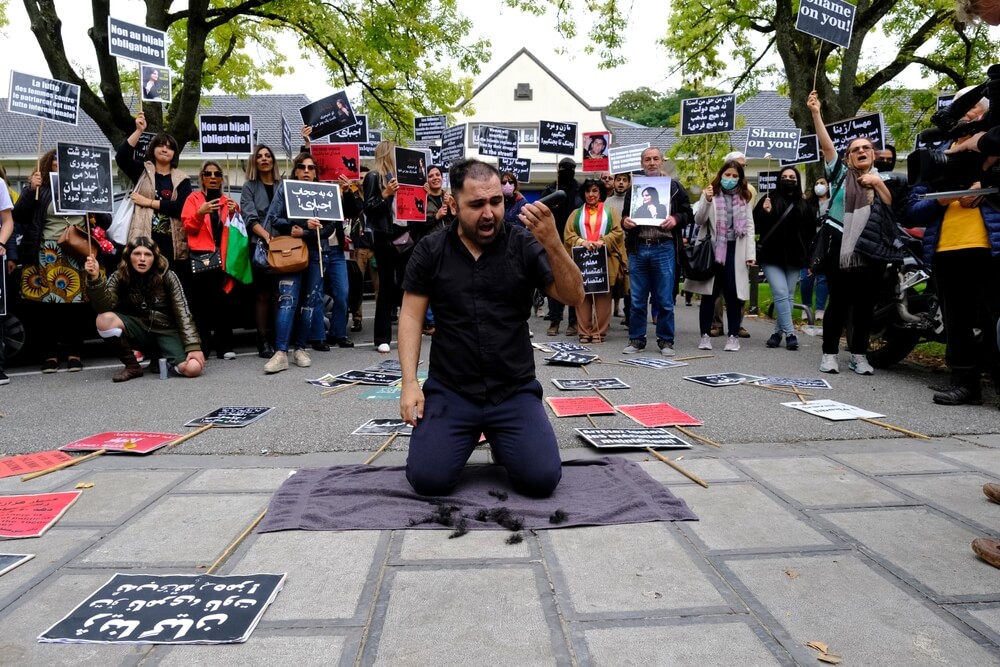
Iran’s protest movement escalated sharply this week as demonstrators flooded the streets of Tehran and other cities, answering a call from exiled crown prince Reza Pahlavi while authorities moved quickly to shut down communications across the country.
Nighttime Protests Sweep Tehran
Witnesses said residents in Iran’s capital poured onto balconies, rooftops and streets on Thursday night, chanting slogans after Pahlavi urged people to demonstrate at 8pm local time. When the hour arrived, entire neighbourhoods erupted with shouts of “Death to the dictator!” and “Death to the Islamic Republic!” Others openly praised the former monarchy, chanting: “This is the last battle! Pahlavi will return!”
The demonstrations marked a significant moment for the protest movement, which began in late December over Iran’s struggling economy and has since spread nationwide. Thousands were reported to be on the streets, while others shouted from their homes in scenes reminiscent of earlier mass uprisings.
“This is a moment of unity,” Pahlavi said in a statement, urging Iranians to make their demands heard. He warned the Islamic Republic and the Revolutionary Guard that the world — including US President Donald Trump — was watching closely.
Communications Cut as Death Toll Rises
Almost as soon as the protests began, internet access and phone lines across Iran went dark. Internet infrastructure company Cloudflare and monitoring group NetBlocks both reported widespread outages, which they attributed to government interference. Calls to Iran from abroad, including from Dubai, could not be completed.
Such blackouts have historically been followed by severe crackdowns. According to the Norway-based Iran Human Rights organisation, at least 45 demonstrators have been killed by Iranian security forces since the protests began. A separate tally by the US-based Human Rights Activists News Agency puts the number of dead at at least 39, with more than 2,260 people detained.
Markets and bazaars in several cities also shut down in solidarity with protesters, adding economic pressure to a government already facing deep public anger.
A Leaderless Movement Under Global Scrutiny
The protests have drawn renewed attention to whether a unifying figure can emerge. Pahlavi’s call was widely seen as a test of his influence inside Iran, decades after his father fled the country ahead of the 1979 Islamic Revolution. While some demonstrators openly voiced support for the shah — once an unthinkable act that could have carried a death sentence — analysts caution that the movement remains largely leaderless.
“The lack of a viable alternative has undermined past protests in Iran,” wrote Atlantic Council analyst Nate Swanson, noting that many potential leaders have been arrested, exiled or silenced over the years.
Iranian authorities appear to be taking the unrest seriously. The hardline Kayhan newspaper released a video claiming security forces would use drones to identify protesters, though officials have offered little acknowledgment of the demonstrations’ true scale.
International reactions continue to build. Trump has warned Tehran against violently suppressing peaceful protesters, while European Parliament President Roberta Metsola praised what she called the courage of Iranians demanding freedom and dignity.
As protests continue and communication blackouts persist, the question remains whether this surge of anger will force change — or provoke a harsher response from the state.
