


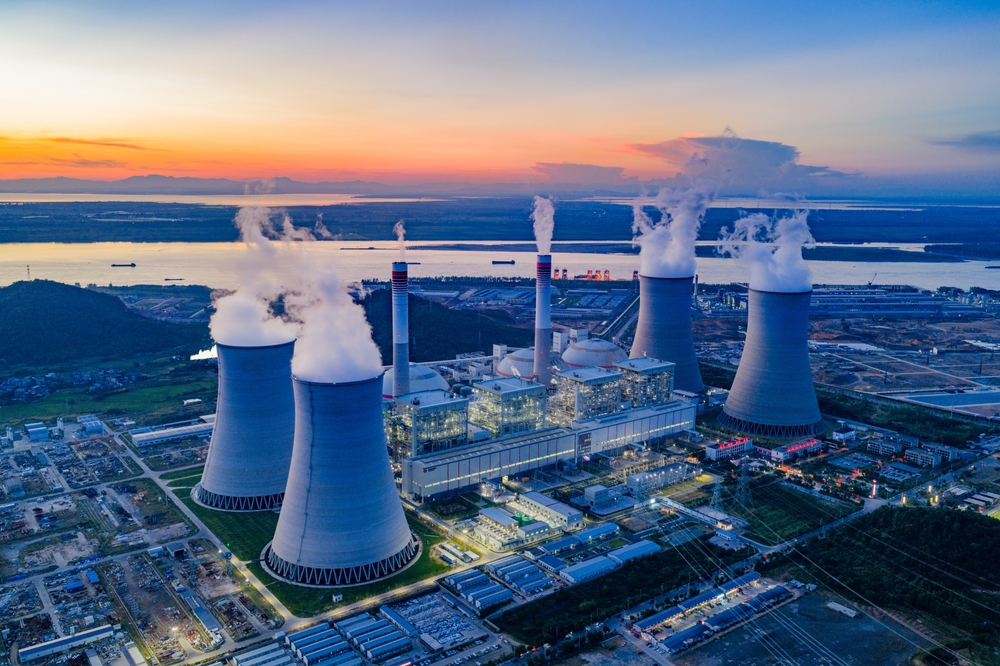
Czechia plans to produce up to 60 percent of its electricity from nuclear power by 2050. The Dukovany plant’s eight cooling towers rise over a massive site where crews prepare ground for two new reactors. Workers drill 140 meters below the surface to collect samples that confirm the terrain can support a $19 billion expansion. This project aims to at least double national nuclear output and reinforce Czechia’s status as one of Europe’s most nuclear-reliant countries.
South Korea’s KHNP secured the contract to build a new plant where two reactors will exceed 1,000 megawatts each. These units will start operating in the late 2030s and will join Dukovany’s four 512-MW reactors from the 1980s. The deal allows Czechia to request two additional reactors at the Temelín plant, which already runs two 1,000-MW units. Officials also plan to integrate small modular reactors after completing the large-scale projects.
Petr Závodský, head of the Dukovany project, said nuclear power will supply most national electricity by mid-century. He emphasized that the expansion will help the country abandon fossil fuels, stabilize prices, meet low-emission targets, and meet rising demand from data centers and electric vehicles.
Europe Reconsiders Nuclear Power in a Warming World
Czechia expands nuclear capacity during a period of revived global interest in atomic energy. Governments face rising energy needs and pressure to cut carbon emissions, and many now view nuclear technology as a viable path. Nuclear plants generate radioactive waste, but they do not release greenhouse gases or carbon dioxide during electricity production.
The European Union included nuclear energy in its sustainability classification system, which opened financing channels for member states. This decision benefits Czechia, Slovakia, Hungary, and France, all of which depend heavily on nuclear power. Belgium and Sweden reversed earlier decisions to phase out nuclear reactors. Denmark and Italy now reassess their own nuclear strategies, while Poland prepares to join pro-nuclear states after partnering with Westinghouse to build three reactors.
Britain signed a cooperation deal with the United States to strengthen nuclear development and committed £14.2 billion to build Sizewell C, the country’s first new nuclear facility since 1995. CEZ, Czechia’s majority state-owned energy company, signed a strategic partnership with Rolls-Royce SMR to develop small modular reactors.
Costs, Politics, and Public Doubts Challenge the Expansion
The Dukovany expansion carries an estimated cost topping €16 billion. The government will hold an 80 percent stake and secure a loan that CEZ will repay over 30 years. Officials also guarantee CEZ stable long-term revenue from electricity sales for 40 years. EU approval is expected because the bloc aims to achieve climate neutrality by 2050.
Závodský stated that new nuclear units remain essential because nuclear currently provides 40 percent of Czech electricity, with coal supplying another 40 percent. He stressed that Czechia must replace coal as the country prepares to end coal use by 2033.
Financing concerns previously delayed progress. In 2014, CEZ canceled a tender for two Temelín reactors after the government refused to offer economic guarantees. Later, Czechia barred Russia’s Rosatom and China’s CNG from the Dukovany bidding process for security reasons after Russia invaded Ukraine. CEZ then partnered with Westinghouse and France’s Framatome to supply nuclear fuel to both Czech plants, ending reliance on Russia. The KHNP agreement secures fuel for an additional ten years.
Environmental groups question the plan’s financial burden and argue that the government should invest in energy efficiency. Critics also point out that Czechia still lacks a permanent site for spent nuclear fuel.
Austria continues to oppose nuclear development near its border. Dukovany and Temelín sit close to Austrian territory, and past disputes caused political tensions and protests. Austria’s parliament already rejected Czechia’s proposal for small modular reactors.
Despite resistance, Czechia continues advancing its nuclear strategy, convinced that atomic power will anchor national energy security for decades to come.
